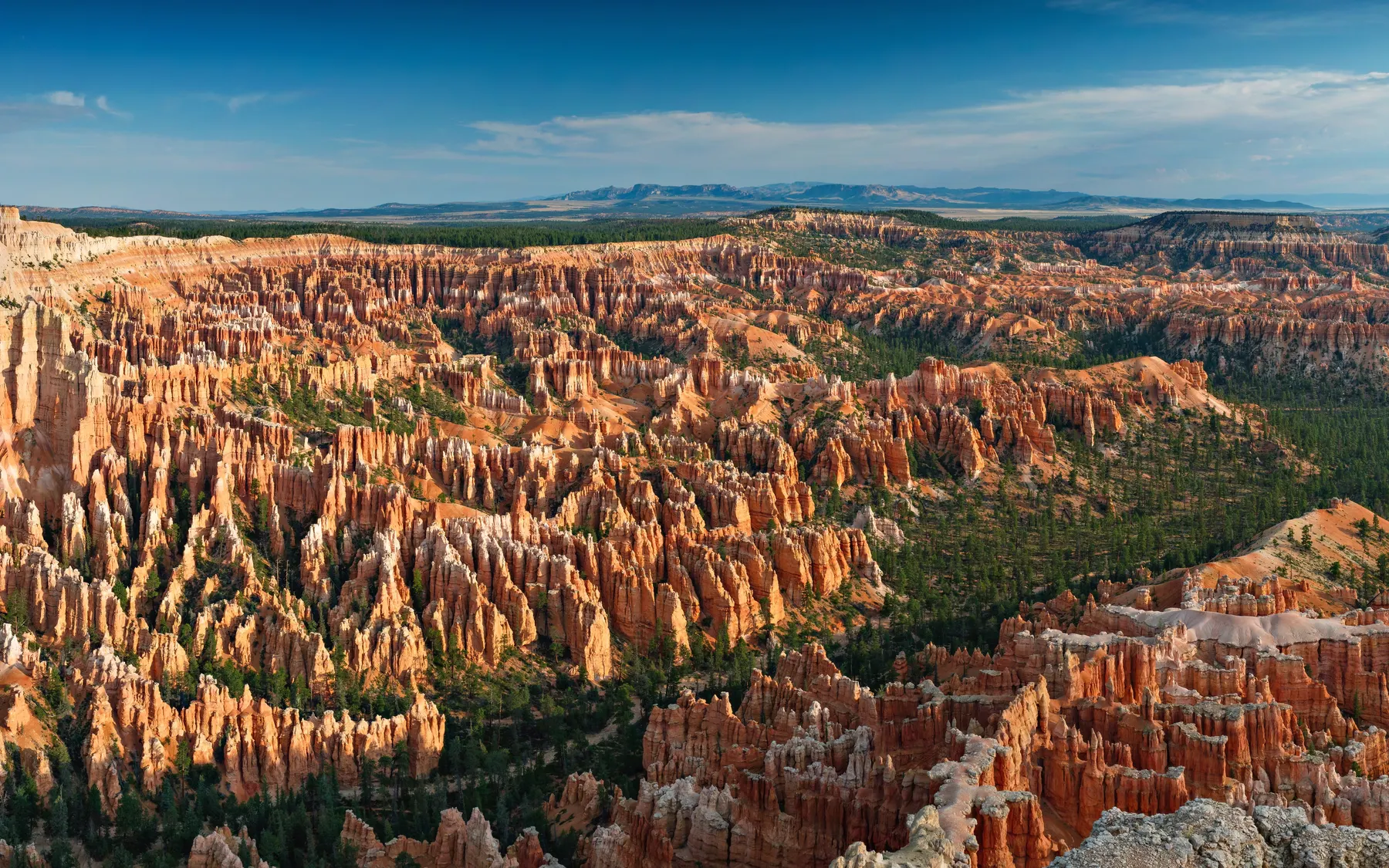

Start with the largest product photo. Look at whether the lettering is clear, the filled areas have even coverage and the fabric lies flat around the design. Then check the inside: a detailed embroidered front may have uncovered thread against your forehead.
How the design goes on
Embroidery, patches and prints give artwork different textures and have different care needs. Custom Ink’s comparison of hat decoration methods discusses embroidery’s durability, while Vistaprint explains how sun exposure affects printed color.
Embroidered on the cap
The machine embroiders the design on the front panel itself, so there’s no patch edge and nothing glued on.
Thread can’t do a smooth color fade or a photo, and it can get stiff. Ricoma, which makes embroidery machines, says embroidery packed too densely makes a stiff, scratchy front.
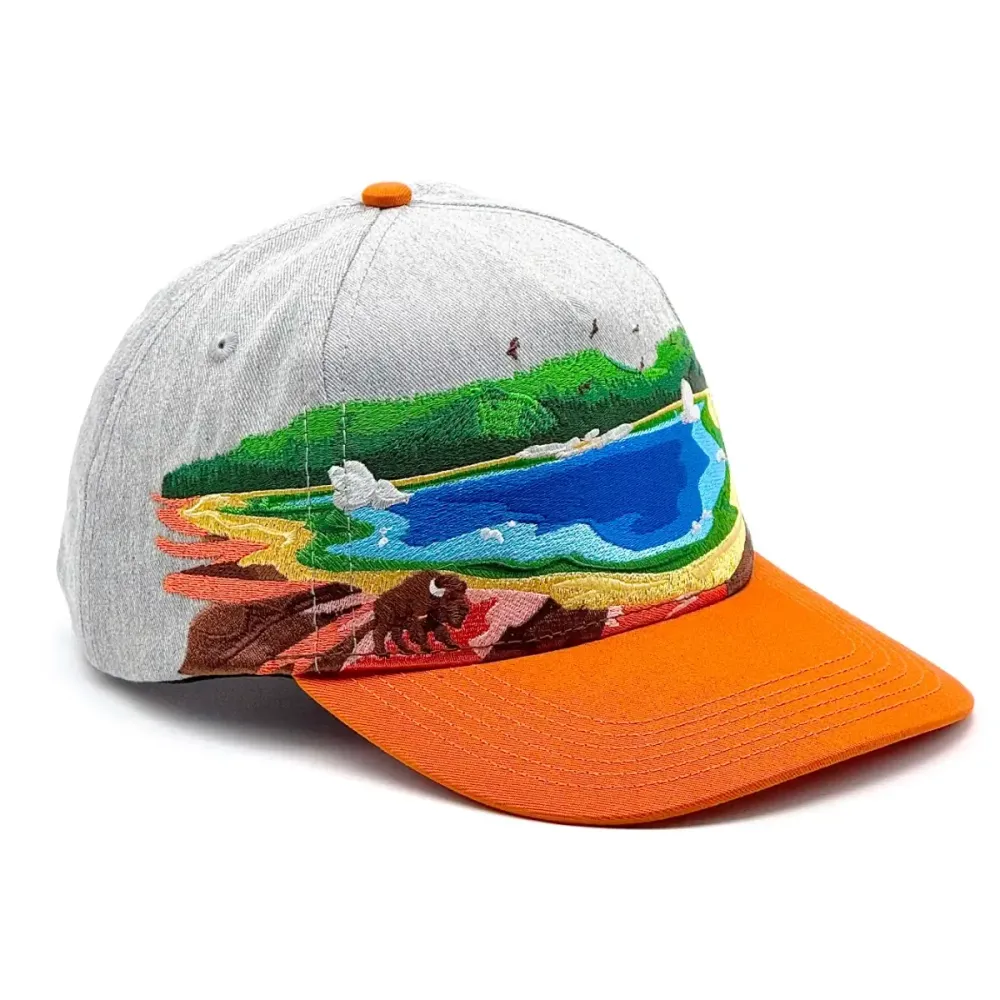
Rainier Hat Co.’s caps use panoramic embroidery, across the front and onto the sides. The company doesn’t say how dense the embroidery is, and the back of it isn’t lined.
Embroidered on a patch
A patch is made separately and then sewn or glued to the cap, which is how a store can sell the same cap with a different park name on each one. Most $25 to $32 park caps are made this way.
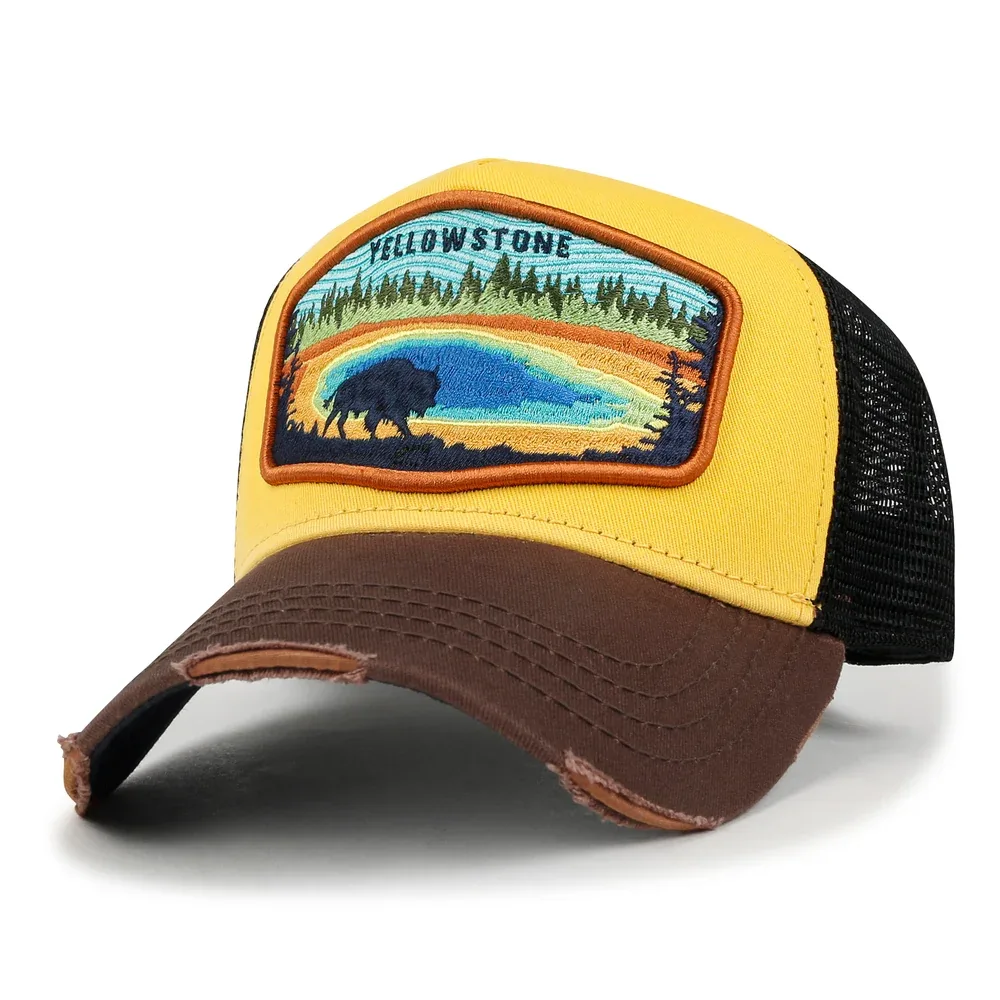
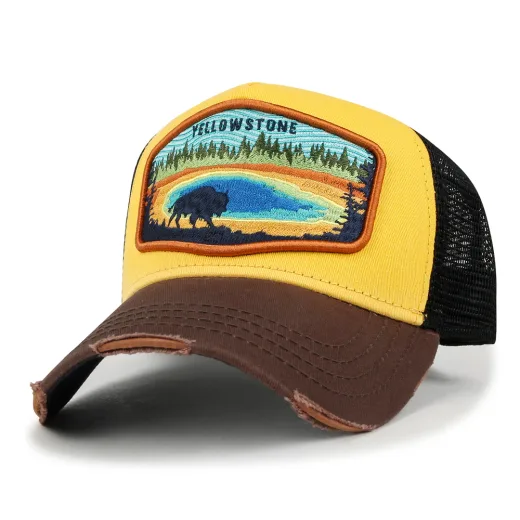
A full-front design can go on an embroidered patch too. The ililily Yellowstone cap has Grand Prismatic Spring and a bison on a patch that covers the front.
Look at the patch’s edge in the photos, where a row of small straight stitches just inside it means it’s sewn on. Listings rarely say, so ask if it matters to you.
Woven patches use thinner thread. They hold small lettering and fine lines and sit flat instead of raised. Western National Parks’ Saguaro trucker and Sendero Provisions’ Grand Canyon cap both use one.
Leather and silicone
Real leather softens with wear, while faux leather can crack or peel. Byward’s Yosemite trucker uses full-grain leather, but Western National Parks’ leather-patch Saguaro cap just says leather, so you can’t tell the grade.
A stamp presses one color into the leather, so you get an outline or lettering.
American Needle’s Buxton Pro uses a raised silicone patch, giving the Yellowstone design a different texture from thread or leather.
Chenille
Chenille is the fuzz on a varsity letter, and it used to shed tufts and leave bare spots until newer yarn mostly fixed that. Parks Project’s Yosemite chenille cap is machine wash cold, though the brand doesn’t say which part of it is actually chenille.
Printed
Printify says screen print lasts 40 to 100 washes before it fades or cracks, depending on the ink and how well it was cured. Puff print is the same ink with an additive that swells, and the raised layer can crack and chip too. Rainier Watch’s Tahoma cap has a puff-print Mount Rainier on the front.
Sublimated
Sublimation has no layer to crack, since heat turns the dye into a gas that bonds inside polyester fibers and makes the image part of the fabric. It only works on polyester, and with no white ink, light colors can’t go on dark fabric. Vistaprint says the color usually lasts as long as the hat.
Wild Tribute’s Grand Canyon Road Trip trucker is sublimated on 100% polyester. Rainier Guest Services, which runs the stores inside Mount Rainier, sells a sublimated photo cap on a 60% cotton blend for $25.99. A blend only holds the dye in its polyester, so expect a faded look.
What to look for in the photo
A sharp photo is useful for comparing the edges of the design and the fabric around it. A small thumbnail won’t show those details reliably.
Cap color showing through the stitches
Before the visible stitches go down, the machine lays an underlay to hold the fabric. The wrong underlay lets the cap show through, which up close looks like specks of the cap’s color inside a filled area.
Ripples or loose threads around the design
The fabric next to the design should lie as flat as the rest of the panel. Ripples mean the fabric puckered while it was sewn, which the right backing prevents. A loose thread between two letters is a jump stitch nobody trimmed.
A bare line inside the outline
Stitches pull the fabric in as they sew, so each shape has to be drawn a little wide to make up for it. When it isn’t, a thin line of bare cap shows between the outline and the fill.
Lettering you can’t read
Printify says lowercase letters need to be at least a quarter inch tall, and capitals a little more. A park name, a founding date and a picture all have to fit in an embroidered area about 4 by 2¼ inches.
One wide band of shiny stitches
Satin stitches are the long glossy parallel ones used for lettering and borders. A satin band wider than about ⅜ inch can loosen and snag, so wide areas should be filled with rows of short stitches instead.
A smooth color fade
Thread shades a sky in bands. If a sunset fades smoothly from orange to blue with no stitch direction visible, it’s printed, whatever the title says.
No inside photo
Caps are often embroidered over a tear-away backing, so what’s left inside is the back of every stitch, right against your forehead. An iron-on cover like Sulky’s can soften it. An inside photo shows whether it’s covered, and if the listing doesn’t have one, buy where returns are free.
Polyester thread keeps its color longer
Madeira, which makes both polyester and rayon thread, says polyester stands up to sun, fading and bleach and feels a bit crisper. Rayon is softer, but bleach and brighteners dull it and it’s weaker when wet. For a cap that sits in the sun a lot, polyester is the safer thread.
Rayon is a little shinier, but that’s hard to see in a photo, and listings almost never name the thread. One that does is the Yosemite Conservancy’s Rustek cap, which lists Tencel, a wood-pulp fiber like rayon. Assume any embroidered cap could be rayon, and skip the bleach.
The cap under the design
- Structured snapback
- Unstructured dad cap
A stiff front holds a wide design upright, but it won’t pack flat. The shape comes from buckram, the backing behind the front panel. Some buckram is stiffer than others, and most listings say structured or nothing at all. Park hat styles, explained draws the shapes side by side.
A 5-panel cap has one piece across the front, so a wide design runs without crossing a seam. Rainier Hat Co.’s caps, Sendero’s Grand Canyon cap and Yellowstone Forever’s retro trucker are all 5-panel.
None of these caps lists a UPF rating, and most have cotton crowns, so for a summer hike with no shade, get a real sun hat. What to wear hiking in Zion covers brims and neck capes.
One size means different heads
Every cap here is one size with an adjustable back, but what one size means depends on the maker. Flexfit says its adjustable caps fit 20¾ to 23⅞ inches around, and Byward gives the same range.
Parks Project’s Zion chart says 19½ to 24, while ililily gives one number, a 58 cm band. Rainier Hat Co. gives no range, and some buyers say its caps run large.
Measure your head with a soft tape where the band sits. If you’re near either end, buy from a maker whose range includes you, or where returns are free. A snapback adjusts one hole at a time, so if you’re between holes you choose tight or loose. A strap with a slide buckle fits anywhere in between.
The same Yellowstone view, embroidered or on a patch
Both put Grand Prismatic Spring and a bison across the front. Rainier Hat Co.’s is embroidered on the cap and costs about $15 more, while ililily’s is on a patch.
Best for panoramic embroidery
Yellowstone National Park Hat
Rainier Hat Co.
- Style
- Structured mid-profile 5-panel snapback
- Design
- Panoramic embroidery of Grand Prismatic Spring across the front and sides
- Made of
- 100% cotton; heather gray crown
- Fit
- Plastic snapback; one size
- Care
- Hand wash only
- Giving
- Rainier Hat Co. says it donates 100% of profits to national park nonprofits
- Reviews
- 5.0 from 6 reviews on Rainier Hat Co.'s site
There’s no patch edge and no brand logo on the front. US shipping is free, and so are returns within 30 days if it’s unworn, which matters for a one-size cap. The Rainier Hat Co. brand page covers its reviews and stores.
Downsides
$44.99 is about as much as a park cap costs, and there’s no size range given. Rainier Hat Co.’s own inside photo shows the back of the embroidery uncovered, and that sits on your forehead.
Best for the same view on an embroidered patch, for $30
Yellowstone Embroidery Trucker Hat
ililily
Some colors or sizes were sold out when we checked.
- Style
- Trucker with a structured cotton front, mesh back and distressed brim
- Design
- Embroidered patch of Grand Prismatic Spring and bison across the front; Yellowstone on the back mesh
- Made of
- 60% cotton, 40% polyester
- Fit
- Snapback
It has the same view on an embroidered patch that covers the front, and the mesh back makes it the cooler cap of the two.
Downsides
ililily says don’t wash it, just wipe it with a damp cloth. It’s one size, about 58 cm or 7¼, so a big head may not fit.
What you pay for
A plain cap with a park-name patch costs $25 to $32, and most park-store caps land right around $28. Brands with their own art charge about $34 to $45, and panoramic embroidery sits at the top of that range. You’re paying for the artwork and the embroidery time.
| Hat | Price |
|---|---|
| Reviewed below | |
 Full-front embroidered patchYellowstone Embroidery Trucker Hatililily | $30 |
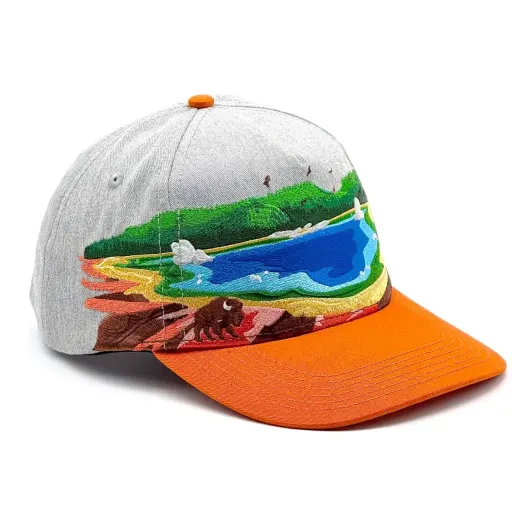 Panoramic embroideryYellowstone National Park HatRainier Hat Co. | $44.99 |
| Not reviewed here · links go to the store | |
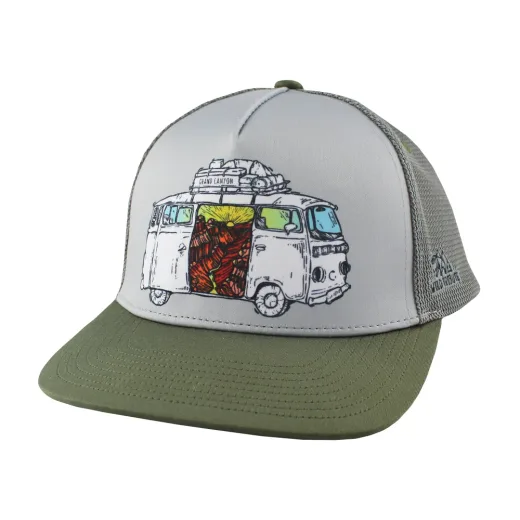 Hard useGrand Canyon Road Trip Trucker Hat, at Wild TributeWild Tribute | $34.95 |
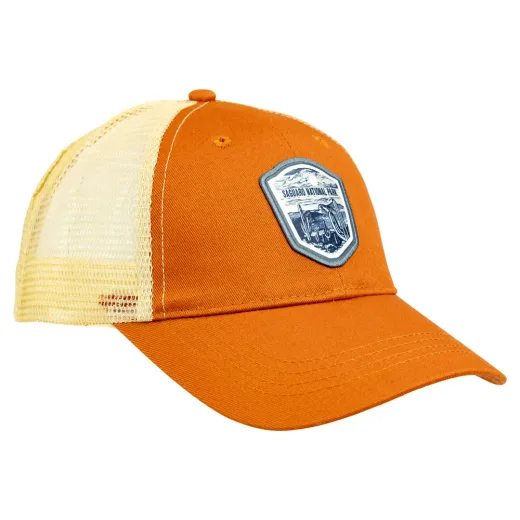 Small, sharp letteringSaguaro National Park Mesh-Back Cap, Wilderness Stamp, at Western National ParksWestern National Parks | $29.99 |
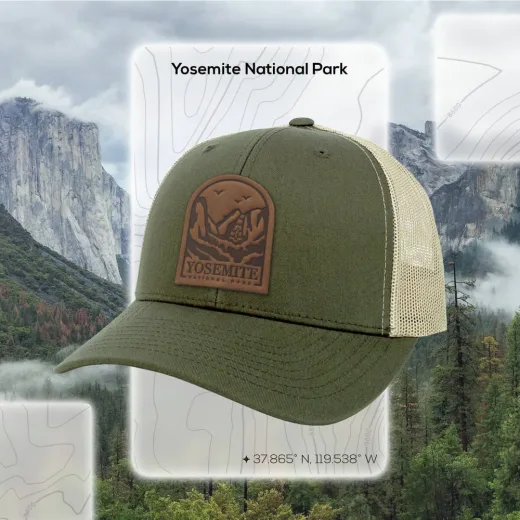 Leather that ages wellYosemite National Park Leather Patch Trucker Hat, at Byward OutfittersByward Outfitters | $33.75 |
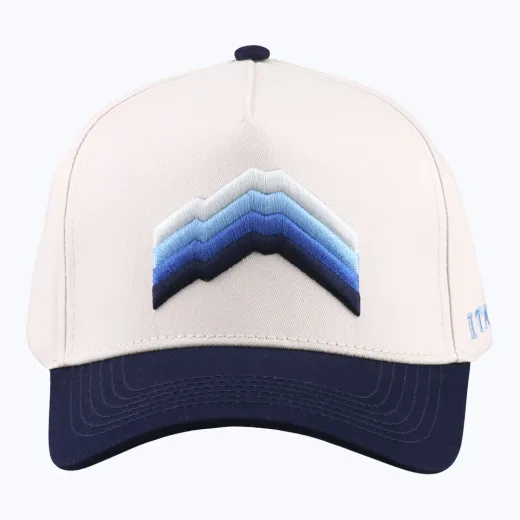 Raised puff printTahoma Turbo Blue Snapback Cap, MRNP Edition, at Rainier WatchRainier Watch | $36 |
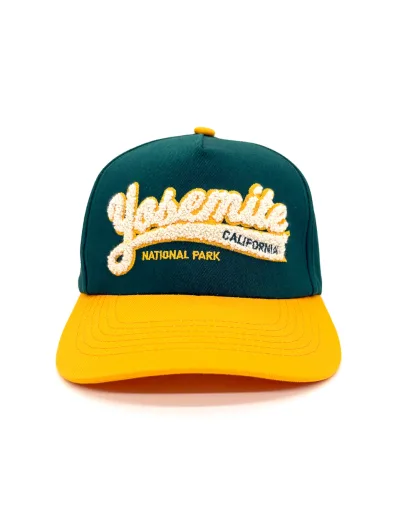 The varsity lookYosemite Vintage Chenille Hat, at Parks ProjectParks Project | $40 |
Our picks by budget and use are in the best national park hats. If it’s a gift, our gift guide compares return windows.
Read the listing
These details help you judge whether the hat and the shop suit you.
- How the design goes on: embroidered, woven, printed, sublimated, leather or faux leather. Graphic or patch alone leaves the material unclear.
- Leather comes with a grade, like full-grain. Leather-look means it isn’t leather.
- There’s a size range in inches or centimeters, and your head is in it.
- You can live with the care line, whether that’s machine wash, hand wash or don’t wash.
- Return terms, including who pays shipping. Free returns are helpful when you can’t try the cap on.
If there’s no size range, ask the seller to measure the band at its smallest and largest setting, which takes a minute with a soft tape.
For a buying comparison using these differences, see embroidered national park hats. It covers embroidery on the crown, smaller patches and full-front patches, with each maker’s published care instructions.